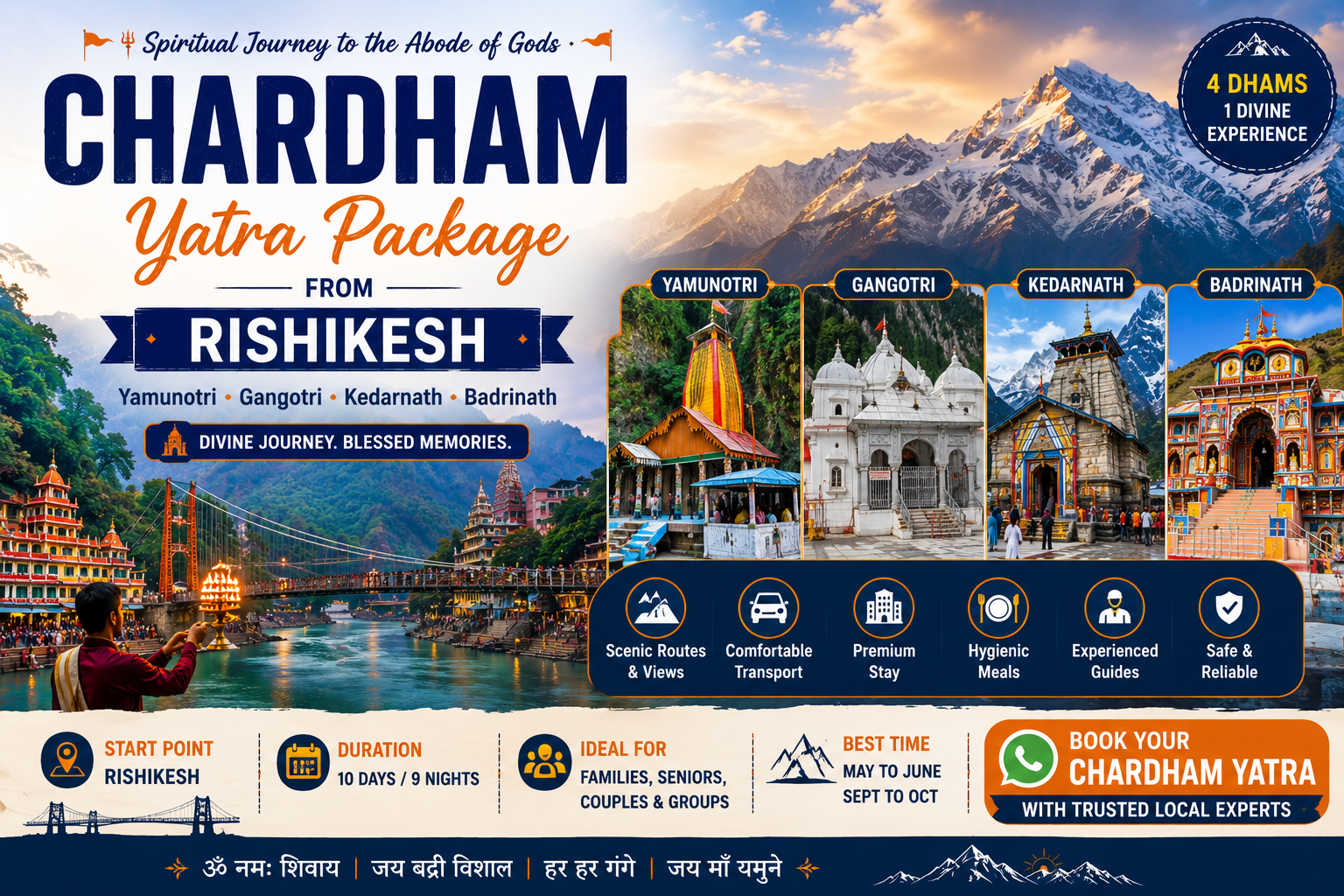
Chardham Yatra Tour Packages 2026
Char Dham Yatra covers the four sacred dhams of Uttarakhand: Yamunotri, Gangotri, Kedarnath and Badrinath. These routes are beautiful, spiritual and sensitive to Himalayan weather, so every family needs a plan that respects altitude, road timing, rest breaks and real mountain conditions.
Approximate height of the dhams: Yamunotri is around 3,293 m, Gangotri around 3,100 m, Kedarnath around 3,583 m and Badrinath around 3,133 m above sea level. Weather can change quickly on this route. May and June are busy and pleasant in daytime, while mornings and nights stay cold. July and August can bring rain and road delays. September and October are usually clearer, colder and good for comfortable darshan planning.
We plan Char Dham Yatra from real ground experience because our birthplace is in this region. We know the road conditions, local stays, food points, route breaks and weather behavior from lived experience. That local understanding helps us plan journeys for families, children, elders and travelers of all age groups so they can complete the yatra with comfort, patience and confidence.
Our Chardham Tour Packages
Our Char Dham Yatra packages for 2026 include fixed departure options and private customized packages. Package facilities are planned according to the selected package type, so guests can choose the comfort level that matches their family, budget and travel style.
Package price may increase or decrease according to pickup city, hotel category, vehicle type, group size, route comfort and special requirements requested by the customer. Every itinerary is designed package-wise so travelers of all age groups can stay comfortable, energetic and relaxed through the journey.
Our goal is to make the Char Dham Yatra comfortable, memorable and unforgettable, with safe planning, practical timing and many beautiful memories at the end of the trip.
Day-wise Char Dham Yatra Itinerary
A comfortable Char Dham Yatra from Haridwar or Rishikesh usually needs 10 days. Day 1 starts with pickup from Haridwar, Rishikesh or Dehradun and drive to Barkot. Day 2 covers Yamunotri darshan from Janki Chatti and return stay at Barkot. Day 3 moves from Barkot to Uttarkashi with relaxed stops. Day 4 is Gangotri darshan through the Bhagirathi valley and return to Uttarkashi.
Day 5 is the long drive from Uttarkashi to Guptkashi, Phata, Sitapur or another Kedarnath base location. Day 6 covers Kedarnath by trek, pony, palki or helicopter as per the traveler plan. Day 7 returns from Kedarnath route and gives the body time to recover. Day 8 continues towards Badrinath through Chopta, Joshimath or Pipalkoti route depending on road status. Day 9 covers Badrinath darshan, Mana village and nearby points. Day 10 returns to Rudraprayag, Rishikesh or Haridwar.
For Delhi pickup, two additional travel days are usually added. Guests can start from Delhi, reach Haridwar or Barkot side depending on arrival time, and complete the same Yamunotri, Gangotri, Kedarnath and Badrinath sequence with proper night halts.
Routes from Haridwar, Rishikesh, Delhi and Dehradun
Haridwar and Rishikesh are the most practical starting points for Char Dham Yatra because they reduce hill driving on the first day and offer good hotels, railway access and vehicle availability. The common route is Haridwar or Rishikesh to Barkot, Barkot to Yamunotri and back, Barkot to Uttarkashi, Uttarkashi to Gangotri and back, Uttarkashi to Guptkashi, Kedarnath, Badrinath and return through Rudraprayag, Devprayag and Rishikesh.
Dehradun pickup is useful for guests arriving by flight. From Dehradun the route can start towards Barkot through Mussoorie or Vikasnagar side depending on road condition. Delhi pickup works best when guests want complete cab support from home, airport or railway station, but the plan should include longer driving hours and one extra halt if senior citizens or children are traveling.
Route timing can change because of traffic, landslides, temple rush, helicopter reporting, local shuttle rules and weather. We keep the itinerary practical instead of overloading sightseeing on heavy drive days.
Yamunotri, Gangotri, Kedarnath and Badrinath Details
Yamunotri is the first dham in the traditional sequence. The road usually reaches Janki Chatti, from where travelers complete the temple route by walking, pony or palki. Gangotri is easier compared with Yamunotri and Kedarnath because the temple is reached by road, but the Uttarkashi to Gangotri valley still needs early start and weather awareness.
Kedarnath is the most demanding part of the Char Dham package. Travelers normally reach Sonprayag, take local shuttle support towards Gaurikund, and then continue by trek, pony, palki or helicopter. Stay choices near Kedarnath are limited and basic during peak season, so many families prefer base stay at Sitapur, Phata, Guptkashi or nearby locations with a carefully timed darshan day.
Badrinath is usually planned after Kedarnath. The route passes through important Himalayan towns and river confluences. Badrinath temple darshan, Tapt Kund, Mana village and nearby viewpoints can be included when road timing and weather allow.
Price, Inclusions and Exclusions
Char Dham Yatra package price depends on travel month, pickup city, hotel category, vehicle type, number of travelers and final route pace. Budget packages focus on clean basic hotels and practical transport. Standard and deluxe plans add better room category, location comfort and smoother stay selection where available.
Common inclusions are private vehicle, driver allowance, toll and parking as per package, hotel stay, breakfast and dinner in most plans, route planning, yatra registration guidance, daily coordination and local support. Vehicle options can include Dzire, Ertiga, Innova, Crysta, tempo traveller and group vehicles depending on group size.
Common exclusions are flight or train tickets, lunch, personal expenses, VIP darshan, pony, palki, doli, helicopter tickets, local union shuttle charges, extra room heater charges, laundry, medical costs, travel insurance and anything not clearly mentioned in the final written quote.
Char Dham Registration Guide
Char Dham Yatra registration is required as per Uttarakhand yatra rules. Travelers should keep Aadhaar or valid ID proof, mobile number, travel dates and route details ready. The registration QR code or confirmation should be carried on phone and in printed form when possible.
Registration details must match the traveler information. During peak dates, checking points can ask for registration proof, ID proof and route details. TraveloHimalayas guides guests on the registration process, required documents and practical timing, but travelers should also follow the latest government instructions active during their travel dates.
For senior citizens, children and guests with health conditions, it is better to complete registration early and share medical limitations with the tour planner before finalizing hotels, Kedarnath plan and daily travel hours.
Best Time and Packing List
The best time for Char Dham Yatra is usually May to June and September to October. May and June are popular because temples are open and daytime weather is pleasant, but traffic and hotel demand are high. July and August can bring rain, landslides and route delays. September and October are colder but often clearer and more peaceful for families.
Carry warm layers, thermals, raincoat or poncho, comfortable walking shoes, extra socks, gloves, cap, sunscreen, sunglasses, personal medicines, basic first-aid, ID proof, registration copy, power bank, small cash, light snacks and reusable water bottle. For Kedarnath, keep luggage light and carry only essentials for the trek or helicopter day.
Senior citizens should carry prescribed medicines, doctor advice if needed, glucose or ORS, comfortable footwear and a realistic walking plan. The journey is spiritual, but it is still a high-altitude Himalayan route, so comfort and patience matter more than rushing.