Kedarnath Temple History, Origin and Sacred Traditions
Explore Kedarnath Temple history with a clear distinction between Pandava tradition, Adi Shankaracharya associations, temple evidence and Bhairavnath belief.
Direct answer
Kedarnath is an ancient Shiva pilgrimage landscape, but one exact construction date cannot explain its whole history. Official shrine material links the present temple with an eighth-century Adi Shankaracharya tradition and also records the belief in an earlier Pandava shrine. The Pandava story is a sacred traditional account, not a dated archaeological record.
At a glance
Deity
Lord Shiva
Traditions
Jyotirlinga, Panch Kedar and Chota Char Dham
River landscape
Mandakini valley
Guardian tradition
Bhairavnath, according to Uttarakhand Tourism
The sacred landscape before a construction date
Kedarnath stands in the upper Mandakini valley beneath high Himalayan peaks. The Shri Badarinath Kedarnath Temple Committee identifies it as part of Uttarakhand’s Char Dham and Panch Kedar traditions and as one of the twelve Jyotirlingas. These overlapping traditions explain why Kedarnath cannot be reduced to a single building date.
Pandavas and the Panch Kedar account
According to Hindu tradition, the Pandavas sought Shiva after the Kurukshetra war. Shiva avoided them in the form of a bull and disappeared into the earth; the hump is worshipped at Kedarnath, while other manifestations are associated with Tungnath, Rudranath, Madmaheshwar and Kalpeshwar.
This account explains Kedarnath’s position within Panch Kedar. It should be described as scriptural or traditional memory rather than a documented construction report.
Adi Shankaracharya and the present temple tradition
The official temple committee states that the temple was built in the eighth century by Adi Shankaracharya and stands beside the site of an earlier temple attributed in tradition to the Pandavas. Uttarakhand Tourism similarly says the present structure is associated with Shankaracharya while the original shrine is linked by legend to the Pandavas.
These official accounts establish the importance of the Shankaracharya tradition. They do not remove uncertainty about every phase of construction, repair and earlier worship at the site.
Architecture and survival
The temple is built from large, dressed stone blocks and contains a sanctum and assembly space. Its endurance in a severe high-altitude environment is historically important. The main shrine survived the destructive 2013 disaster, while the surrounding settlement suffered catastrophic loss.
Devotees often interpret the survival through faith, including the role of the boulder behind the temple. A factual account should distinguish the documented survival of the structure from devotional interpretations of divine protection.
Bhairavnath as guardian of Kedarnath
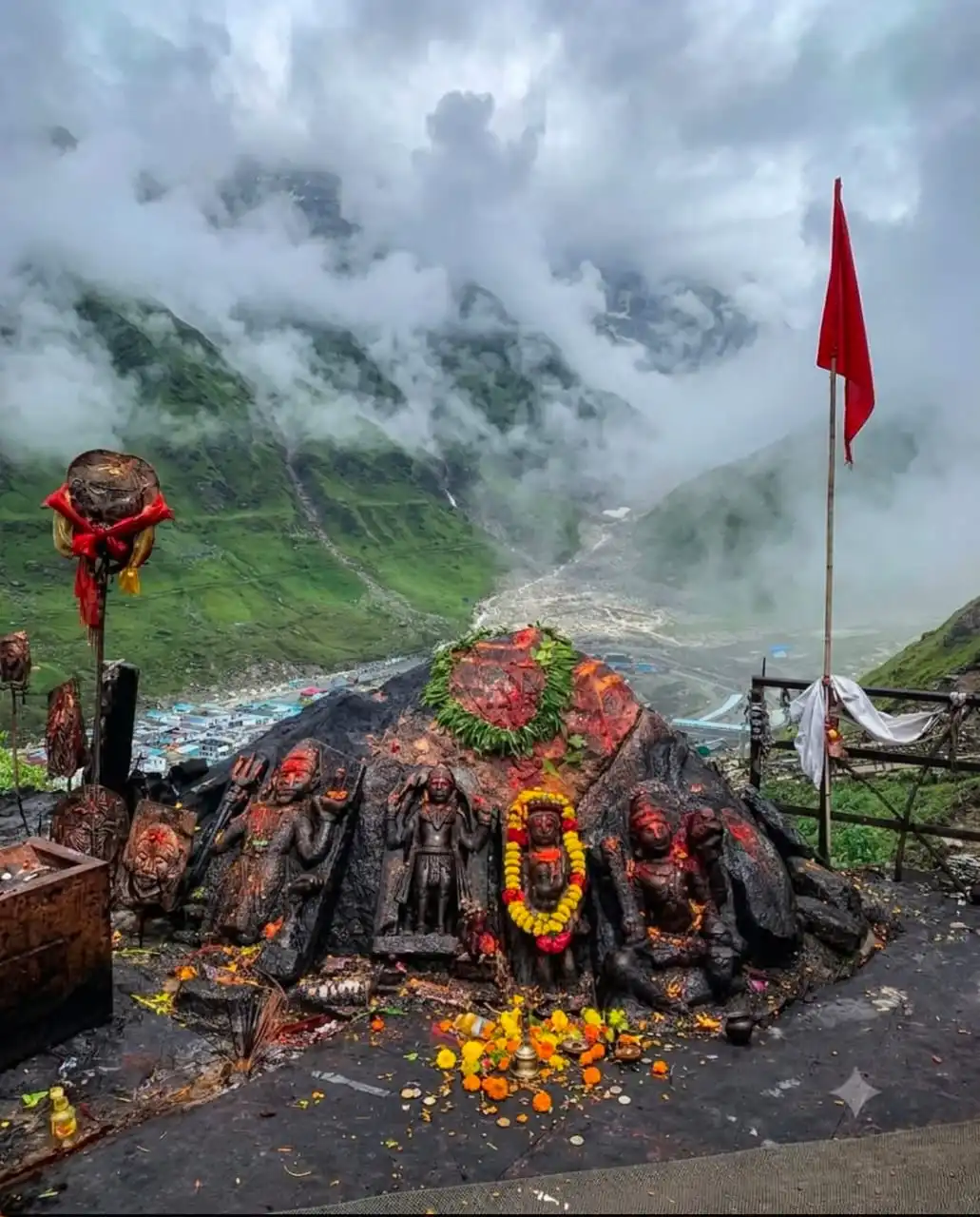
Uttarakhand Tourism describes the nearby Bhairav Nath Temple as the guardian of Kedarnath and records the belief that Bhairav protects the shrine and town during winter closure. This is strong evidence for a specific, publicly recognised guardian tradition.
Read the distinct Bhairavnath Temple and Kedarnath guardian tradition page for the role, winter belief and limits of the historical evidence.
Kedarnath in the Uttarakhand circuit
Kedarnath is the Shiva Dham within the four-stop Uttarakhand pilgrimage. Its history belongs both to the broader Chota Char Dham history and to the separate Panch Kedar tradition.
Related travel reading
For route and darshan planning, use the Kedarnath travel guide. Travelers comparing a commercial itinerary can review the Kedarnath Yatra package near the end of their research.
Common questions
Who built Kedarnath Temple?
Official shrine and tourism sources associate the present temple tradition with Adi Shankaracharya in the eighth century, while an earlier shrine is linked by tradition to the Pandavas. The two statements describe different layers of sacred history.
Is Bhairavnath the guardian of Kedarnath?
Uttarakhand Tourism explicitly describes Bhairav Nath Temple as the guardian of Kedarnath and records the winter-protection belief.
Is the Pandava story historical fact?
It is a central Hindu traditional account explaining Panch Kedar, but it is not a securely dated archaeological record.
Sources and classification note
Government and official shrine sources below verify locations, institutional descriptions and documented building associations. Stories introduced as tradition or belief are not presented as archaeological fact.